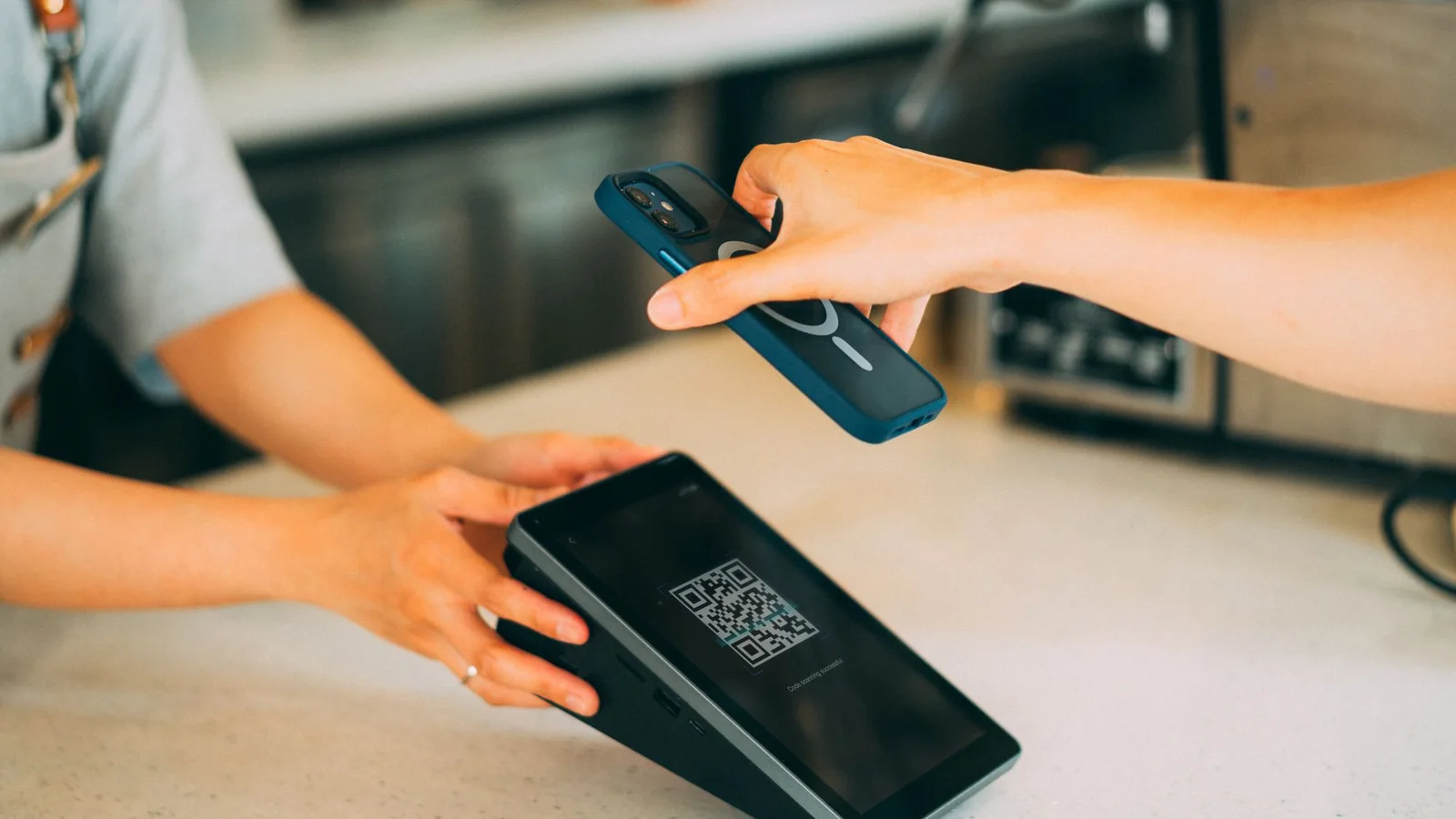
Yes, some foreign residents can open Indonesian bank accounts, but a passport alone does not guarantee approval. You also do not necessarily need a local account to pay at a QRIS merchant. First distinguish a person living legally in Indonesia from a short-stay visitor. Banks assess identity, stay documentation and financial information. QRIS is a payment standard: access depends on the bank or payment app, not on the presence of a QR code.
A foreign worker in Jakarta with an active ITAS should compare specific foreign-customer accounts. A tourist spending a week in Bali should first plan for a card, cash or participating cross-border QR payment app—not assume every bank will issue a local account.
Which option fits your situation?
| Your position | Useful first step | What can prevent it |
|---|---|---|
| Foreign worker with active ITAS/KITAS and a local address | Check a resident foreign-person product, such as Mandiri Livin WNA, and compare a branch product | Identity, residence documents, onboarding, country eligibility and bank screening |
| Foreign spouse or family member with ITAP/KITAP | Ask about a resident foreign-person account | Marriage or family relationship does not replace bank KYC and source-of-funds checks |
| Foreign resident with a Golden Visa | Mandiri lists the valid Golden Visa in its passport-based route | The bank still decides whether documents and risk checks pass |
| Tourist without an Indonesian residence permit | Keep an international card and rupiah cash; try QRIS Cross-Border only if your home app supports Indonesia | Passport-based resident banking registration does not cover every tourist |
| Your first bank rejects the application | Request the exact missing-document explanation and evaluate a second bank/product | A general regulator statement cannot compel an individual bank to approve you |
The point is to compare actual named bank products, not believe a blanket “foreigners can bank” slogan.
Mandiri versus BCA: the real difference
Bank Mandiri's Livin WNA: Its official foreign-national instructions say the passport route is available to foreigners domiciled in Indonesia, with a passport having at least six months' validity plus a valid ITAS, ITAP or Golden Visa. Onboarding asks for phone/email OTP, actual Indonesian address, occupation, source-of-funds and foreign-taxpayer declarations, and face verification. The published minimum initial deposit for this passport-based route is Rp100,000. This is not the national minimum for every account, nor does the word “passport” remove the residence requirement. Mandiri also publishes a country-eligibility list that must be checked for your nationality.
BCA's Tahapan account: BCA's product rules list a passport for foreign citizens, with KITAS/KITAP for foreigners domiciled in Indonesia. For a nonresident foreign applicant, BCA may ask for additional documents under its customer-due-diligence rules. That is a possibility for assessment, not a guarantee for tourists. BCA lists Rp500,000 as the Tahapan initial deposit—a product-specific figure, not a universal WNA charge.
A newly arrived employee whose ITAS has not yet been issued cannot point to Mandiri's “passport account” headline as proof of eligibility. A tourist also cannot treat BCA's nonresident-document category as a promise of approval. Banks can request further evidence or reject an application based on their actual product/risk policies.
A 2015 OJK announcement discussed specific foreign-currency tourist accounts. It is historical, not a current universal right to open an everyday rupiah account with only a passport. Use the chosen bank's live 2026 product conditions.
Prepare a working application, not just a passport photo
For a qualifying resident, prepare a valid passport; the required valid ITAS/ITAP/Golden Visa; real residential and work details; a phone and email that receive bank OTPs; source-of-funds information; and the applicable taxpayer declarations. A bank can ask for more KYC evidence. Do not assume that a local Indonesian tax number (NPWP) is mandatory in precisely the same form for every foreign applicant: ask what declaration or document your individual bank and tax status require.
Use this order: choose an actual product; confirm foreign-national eligibility and its minimum deposit/maintenance fees; check document validity and mobile OTP; register only through the bank's official app or branch; give true occupation/address/tax information; then verify the account, card, limits and QRIS features after approval.
If rejected: An app might fail face verification or your foreign phone might not receive OTP. A permit may be close to expiry. Call official support or visit a bank branch if that channel is available. Never buy another person's pre-verified wallet/account, share OTPs with an agent or use a fake Indonesian address. Use a trusted card or cash while resolving the problem.
How QRIS works without a local account
QRIS is the Indonesian standard for merchant QR payments, not an app, card or bank account. Bank Indonesia explains that an approved payment service provider and an eligible funding source—such as a bank balance, supported card instrument or registered electronic money—must actually support the transaction. A QR sticker on a market stall does not give a visitor a local wallet.
The published maximum QRIS payment is Rp10 million per transaction, with potentially smaller issuer limits or daily/monthly caps. This ceiling does not mean everyone can store Rp10 million in an unverified wallet or that every foreign card is accepted. BI's practical QRIS advice says ordinary QRIS consumer payments should not carry an additional QRIS-specific surcharge; distinguish any cross-border FX or provider fees.
Visitors have another possibility: QRIS Cross-Border connects certain overseas payment systems to participating Indonesian merchants. Check whether your actual home-country bank/payment app explicitly supports the Indonesia QRIS corridor, its rate/fees and that merchant. Owning an international debit card is not the same as having a compatible QRIS scanner.
Small trial transaction: Before relying on QRIS for the week's meals, make one low-value purchase with the approved app, check the merchant's real name and amount on the confirmation screen, and confirm successful payment with the shop. Keep a card and some rupiah cash in reserve.
Protect your money if something fails
A merchant's QR sticker looks replaced or the payee name differs: Stop. Ask the shop to show its genuine code; do not pay a mismatched recipient. If already paid, save the transaction ID and immediately contact your payment provider through its official channel.
Your account was debited but the merchant sees nothing: Check the original app's status, ask the merchant to verify, and raise a transaction trace with the provider. Do not automatically pay twice or accept a stranger's screenshot as proof that the first payment failed.
Someone asks for OTP, password or card PIN: Refuse, including if the person claims to be the bank, QRIS operator or broker. If your phone is lost or you notice unauthorised activity, use verified bank support to freeze sessions and cards, then preserve evidence.
You are leaving Indonesia: Ask the bank whether your new residence/tax status affects product eligibility, how to update your contact number and how to close an account correctly. A resident account is not promised to remain suitable after status changes.
Make one good decision today
Resident WNA: Compare the passport/permit conditions of Mandiri Livin WNA and BCA Tahapan, and get the complete fees for the exact account you choose. Tourist: Depend on a card and cash; use cross-border QRIS only once your own provider confirms support. If a bank or payment fails: resolve the actual verification or dispute with the institution rather than paying for shortcuts.
For cash-flow planning, see Indonesia cost of living; for your underlying stay/work permissions, see working and staying in Indonesia. These are different decisions.